
We need to let you know that the Games People Play performance at the Arnolfini at 2pm on Sunday 30th September is CANCELLED.
Please see the notice from Poetry Can below.
We are very disappointed not to be able to show this new work as planned but will look to make a new date for the performance as soon as possible. If you were intending to come along to the Arnolfini on Sunday, we are sorry to miss seeing you and do hope this cancellation does not cause you too much inconvenience.
We will post a new date for this performance as soon as we are able.
Notice from Bristol's Poetry Can
Firebird Theatre, Claire Williamson and Bristol Poetry Festival regret to announce the postponement of:
GAMES PEOPLE PLAY
on Sunday 30 September, 2.00PM
at Arnolfini, 16 Narrow Quay, Bristol, BS1 4QA
The postponement is due to the extent of road closures and the inaccessibility of Bristol City Centre during the Bristol Half-Marathon.
We will announce an alternative date shortly.
We are sorry for any inconvenience and disappointment caused by this postponement.
Colin Brown
Director, Poetry Can
12 Great George Street
Bristol, BS1 5RH
Tel: 0117 933 0900
e: info@poetrycan.co.uk
www.poetrycan.co.uk
Wednesday, 26 September 2012

Thursday, 13 September 2012
Games People Play
Games People Play, a performance of new poetry by Claire Williamson and Firebird Theatre at Bristol Poetry Festival.
The performance is on Sunday 30th September, 2pm at the Arnolfini, 16 Narrow Quay, Bristol BS1 4QA
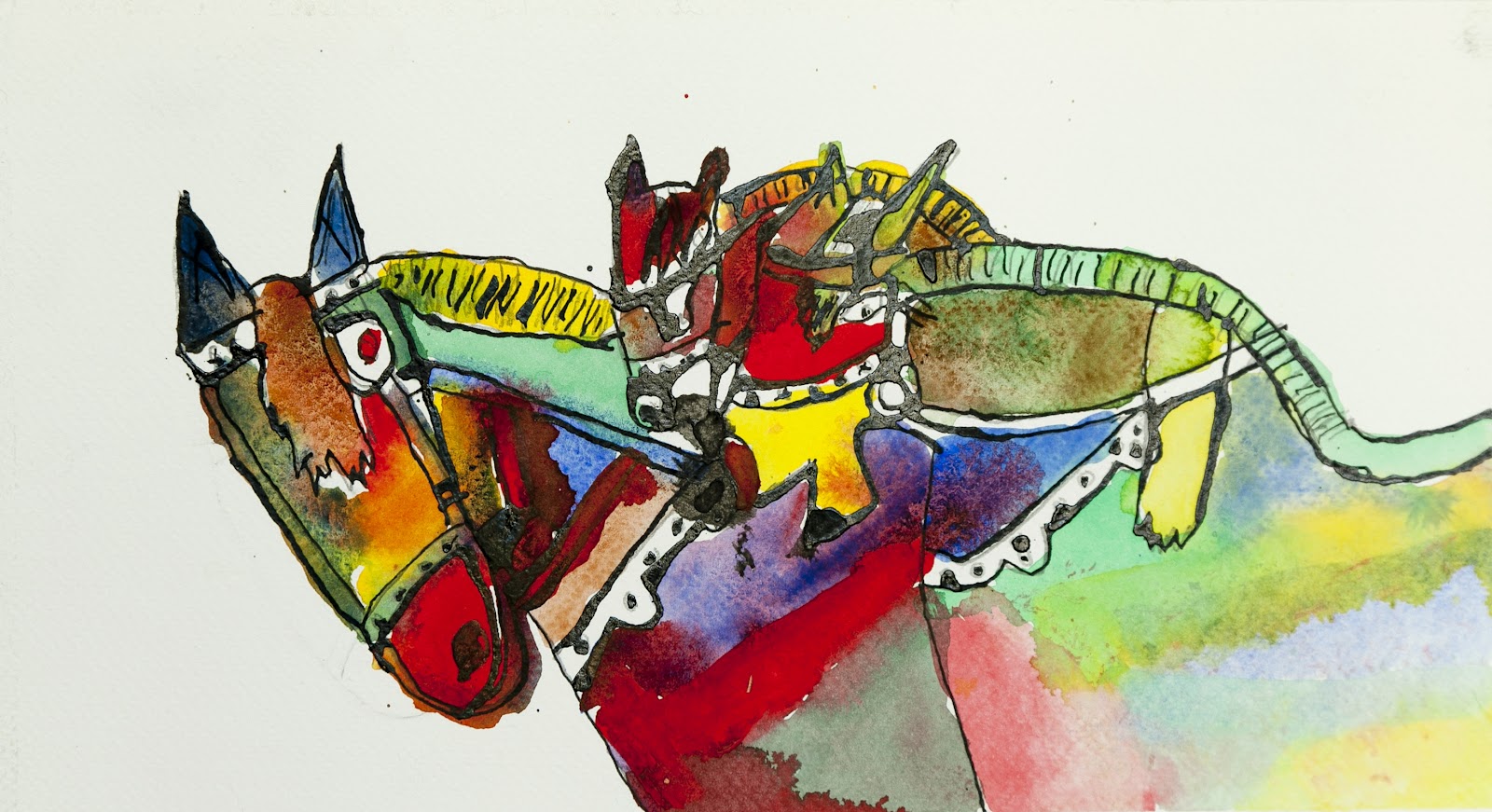
Image by Carol Chilcott, photograph by Amanda
Harman www.amandaharman.co.uk
Games People Play is a group of new poems written by the Firebird Poets: Brenda Cook, Steve Knight, Sharlie Yea, Jenny Stafford and Daniel Bryan and well-know Bristol Poet, Claire Williamson.
This will be a British Sign Language interpreted performance
Tickets cost £5/£3 from the Arnolfini Box Office, telephone: 0117 9172300/01
email BOXOFFICE@ARNOLFINI.ORG.UK
Please see Bristol Poetry Festival brochure for full listings www.poetrycan.co.uk
Sunday, 2 September 2012
Firebird Newsletter
This is the first of the informal newsletters that we hope to be able to post every so often, to keep you up-dated with what we are doing.
We want to do a better job of keeping in touch with you all and hope this will be a more successful way of doing things! Any feedback will be much appreciated.
News
At a special Launch on 29th May, Bristol Old Vic announced that Firebird is to become part of a small group of associate companies and artists who will work with them as part of future discussions, planning and sharing of work over the next 5 years. We are, of course, honoured to be asked to be part of this group; it will give us the opportunity to contribute to and be involved in what is exciting about making theatre in Bristol.
This July, Firebird has been working on a storytelling project with pupils and teachers at Briarwood School. Firebird worked with Year 6 children and their teachers. This project enabled us to look at ways of using theatre to tell a children’s story as simply and as clearly as possible. We also learned more about how we can involve the children in the telling of the story.
Firebird is also currently fund-raising for The Breadhorse Project, which is about us working with young disabled and non disabled people to
create a new, inspirational show to be performed at Bristol Old Vic in 2013.
With this project we will be working in partnership with MAYK (who will work with us as producers), Bristol Old Vic and the Young Company, Theatre Bristol, St Brendan’s Sixth Form College and other Bristol schools. We are hoping to work with Tristan Sturrock, Sarah Moody and Ann Pugh again and new artists that we haven’t worked with before: Mark Lawrence and Laurie Stewart.
The Breadhorse is written by Alan Garner, who has given his permission for us to perform his story. We think this is the first time that the story has been performed, so this is a real first in lots of ways.
We will work hard to make this project happen, subject to funding. We will up-date everyone about our progress and hope to confirm one way or the other about funding by the end of September.
On September 30th Firebird will take part in Bristol Poetry Festival at the Arnolfini; we will send more information nearer the time. The Firebird Poets are currently working with Claire Williamson, well-known Bristol Poet, to write poetry around the nature of games; we are using The Breadhorse to inspire this poetry and hopefully the work can feed into the The Breadhorse Project, later this year.
Thank you Friends
Firebird would like to thank all those people who have joined our Friends and Supporters Scheme. This monthly giving via direct debit is extremely helpful in giving us regular funds that are vital in terms of planning for the future. We now have a new page on our website ‘Support Us’ http://www.firebird-theatre.com/supportus.pdf which tells you about the scheme and also suggests other ways you can support us, shopping on line for instance, or donating via ebay.co.uk
We really appreciate all the support and friendship we have from so many of you, but in these difficult times of funding, where many small arts and theatre groups struggle to survive, we do need your help. So, if you can, let’s formalise our friendship, and get just that little bit friendlier still! We know how hard money can be, so with the Friends scheme you can give as little as £3 (or more if you would like!); every penny is appreciated by us because we know it is from you, and we can promise that it all goes directly into helping us make theatre.
Also, if you know other people who might be interested in supporting us, please direct them to the Support Us page on our website; the more, the merrier. For people who do not have access to the internet and would like to support Firebird, we can also send leaflets in the mail if needed; please just ask.
Finally, please feel free to contact us if you want more information about Firebird, or if you have any ideas or suggestions about supporting Firebird or if you just want to send us a comment or say hello.
Our very best wishes and thanks from all of us at Firebird Theatre
Tuesday, 18 October 2011
Jenny Stafford and Daniel Bryan join other members of Bristol's community for dance performance Handbag at the Arnolfini
Jenny and Dan from Firebird auditioned with other members from Bristol's community and subsequently took part in a dance performance Handbag at the Arnolfini during the Harbourside Festival. They took part in 5 performances during the evening of the 30th July and other members of Firebird were in the audience to cheer them on. They both delivered fantastic performances under the direction of artist, Geraldine Pilgrim. For more information about Handbag, please see below extract below, from the Arnolfini website.
Photographs, below, taken of Jenny and Dan during one of the Saturday performances
From Arnolfini's website:
Handbag Geraldine Pilgrim
A celebratory gem of a performance with great music, dancing and handbags made for ballrooms, civic halls and unusual spaces. In an empty ballroom, a caretaker sweeps away the remnants of a previous event. A woman enters the space and puts down her handbag. A beat begins, a mirror ball turns and the sound of a classic dance track fills the air…
“A witty and wistful performance that, in a few delirious moments, succinctly makes the point that no woman needs a man when she has got her handbag in tow.”
Lyn Gardner, The Guardian
“positive and uplifting. Made me want to dance the night away.”
Photographs, below, taken of Jenny and Dan during one of the Saturday performances
 |
| Jenny, in the red dress on the balcony |
 |
| Daniel, second from the right |
From Arnolfini's website:
Handbag Geraldine Pilgrim
A celebratory gem of a performance with great music, dancing and handbags made for ballrooms, civic halls and unusual spaces. In an empty ballroom, a caretaker sweeps away the remnants of a previous event. A woman enters the space and puts down her handbag. A beat begins, a mirror ball turns and the sound of a classic dance track fills the air…
“A witty and wistful performance that, in a few delirious moments, succinctly makes the point that no woman needs a man when she has got her handbag in tow.”
Lyn Gardner, The Guardian
“positive and uplifting. Made me want to dance the night away.”
Audience member, BAC
Commissioned, scratched and originally performed for the Grand Hall at BAC and subsequently conceived and performed as part of the opening season for the Royal Shakespeare Theatre, Stratford-Upon-Avon, the Transform Festival at West Yorkshire Playhouse and at Arnolfini as part of the Bristol Harbour Festival.
BIG NEWS!! Firebird Theatre becomes an Associate Company of Bristol Old Vic.
It is with great pleasure that we announce that we have been made an associate company of Bristol Old Vic. We are thrilled and very excited about this and look forward to developing future work with Bristol Old Vic and its development programme, Ferment. The Old Vic has released a press release about the associateship, please see below.
Firebird Theatre becomes Bristol Old Vic’s first Associate Company.
Bristol Old Vic has announced that Firebird Theatre is to become their first Associate Company.
The Bristol-based company of sixteen disabled performers has had a long association with Bristol Old Vic, and has premiered all of its work at the theatre since 1990. This new associateship formalises the close relationship the two organisations have nurtured over many years.
Firebird has been creating work together for over twenty years. They began life as the Portway Players, and became Firebird Theatre in 2005.
They first worked at Bristol Old Vic in 1990 when they performed their first piece of professional theatre Yellow Sun, Red Moon. Since then, their shows at Bristol Old Vic have included Faustus (2007) and The Tempest (2010). They recently performed a new performance poetry piece, The Nine Lessons of Caliban, which was written in collaboration with Claire Williamson and developed through Bristol Ferment.
Speaking about the associateship, Emma Stenning, Executive Director of Bristol Old Vic said:
“We’re delighted to announce that Firebird Theatre are an Associate Company of Bristol Old Vic.
“Firebird has been right at the heart of this theatre for many years. They’re any extraordinary ensemble whose bold productions resonate far and wide. Firebird tells big stories that matter to everyone, and this new associateship marks our shared ambition to work more closely together in creating adventurous theatre for Bristol.”
Jane Sallis, for Firebird Theatre said:
“Firebird Theatre is proud and honoured to become the first associate company of Bristol Old Vic.
Often theatre made by disabled actors is seen as being outside the mainstream but Bristol Old Vic has always supported our work and brought it to the attention of its regular audience; we in turn have brought new audiences into the Bristol Old Vic.
“We have never underestimated the importance of being part of the wider theatre community of Bristol, this associateship establishes our place within the community and enables us to develop our role within it.
“We call Bristol Old Vic our ‘theatre home’; our relationship with the theatre is now moving forward into a new and exciting phase. We thank Bristol Old Vic for being such practical and stalwart supporters of Firebird Theatre and our work.”
For further information, please contact Matthew Austin at Bristol Old Vic Press Office on 0117 949 4901 / 07989 500732 or press@bristololdvic.org.uk
Remembering Dorothy Heathcote, friend, colleague, advisor and supporter

Dorothy was a huge inspiration and worked with Firebird in lots of different ways, providing us with support and encouragement over many years. In 1985/86 Dorothy made available the Norman Holm Benefaction Fund (via the University of Newcastle upon Tyne) to the Portway Resource and Activity Centre in Shirehampton, Bristol. This fund enabled the setting-up of numerous community projects, including a theatre group, where original members of Firebird Theatre first met and started working together as the Portway Players. The aim of the community projects was to break down barriers and build understanding between local communities and members of the Portway Centre, working with the over-riding principle that no community can be considered whole unless all its members are included and participate within it. Dorothy worked alongside us to plan these projects and their outcomes.The first piece of theatre performed in a mainstream venue was Red Sun, Yellow Moon, performed at Bristol Old Vic (BOV) in 1990. Dorothy continued to help plan, support and advise on such productions as The Boy with the Cart by Christopher Fry, staged as a community theatre event performed at BOV, and The Bristol Giants, a street theatre event with local school children.
As the Portway Players developed and grew in confidence, Dorothy helped us understand more about Chamber Theatre and how it could be used in Sharing the Stars, using our own poetry. Dorothy visited Bristol several times to work with us on Sharing the Stars and, later on, Faustus. She also came to our performances and supported us as we made the journey to become an independent theatre company and changed our name to Firebird Theatre. Most recently in November 2010, she invited some of us to take part in a Chamber Theatre training day at Birmingham University, which was a great day and helped us to continue to develop our skills.
Dorothy meant a lot to us; she always believed in what we did and supported and encouraged us. We will miss her very much and know that she would want us to continue to develop our work, try hard in everything we do and enjoy making theatre and telling stories. It was a huge privilege and honour to work with Dorothy, she was so generous in the way she shared with us and helped us move forward as a Company. Thank you, Dorothy, we will not forget.
Please see Dorothy's obituary, below, which celebrates everything Dorothy did and the huge number of people she worked with and reached through her work. Also, please visit www.dorothyheathcote.org which has just been launched as the only official website endorsed by Dorothy's family and dedicated to the life and work of Dorothy, to be used as the international meeting place where all memories of Dorothy and her work can be shared, and her practice carried forward.
Dorothy Heathcote Obituary
Dorothy Heathcote MBE, who has died aged 85, was a world-renowned teacher who revolutionised the use of Drama in Education through a variety of pioneering techniques.
It is difficult to grasp how the 14-year-old girl who entered a Yorkshire woollen mill to work in 1940 could become a key international figure in the world of education and drama and yet by the age of 24 she had become a lecturer at the Newcastle-upon-Tyne campus of Durham University, beginning a career that was to span 60 years. In that time she became the inspiration and role model for generations of teachers across the world who recognised in her unique approach the means by which to profoundly engage students and young people with their learning.
It was in 1945 that the headlines in the Yorkshire Post announced: ‘Weaver Gets Chance of Stage Career’ and, indeed, Dorothy trained as an actress, her fees paid for by the mill manager. But, much as she enjoyed acting, her vision extended beyond the stage to the use of theatre as an educational construct. She instinctively recognised the natural human predisposition to use drama as a means of exploring and understanding the world and of developing the fundamental life skills needed for it. With that recognition, Dorothy set herself the task of translating her vision into a classroom practice for all ages that continues to be inspirational to millions.
Her gift was in being able to touch people and give everything she knew away to those who were interested. Her legacy is that so many were interested and, standing on her shoulders, they continue the work of a genius who is for many, the greatest drama teacher of all.
Dorothy remained at Newcastle when it became a university in its own right in 1962. From the School of Education there, word of the charismatic young drama teacher soon began to spread. Her openness of spirit and radical, new pedagogy drew a stream of postgraduate students to Newcastle. She generously welcomed many into her own home and her husband, Raymond and their daughter, Marianne, became used to sharing the house with an annually changing group of temporary residents from home and abroad.
Dorothy created a whole school of drama practice based around the teacher shifting her pedagogy from that of an instructor to inductor, coach, facilitator and fellow artist, recognising the potency for learning of a co-creative process in which learners are empowered. She created a vocabulary of terminology such as drama for learning, drama conventions, teacher in and out of role, secondary role, Rolling Role, Chamber Theatre, Frame, Signing, Mantle of the Expert and Commissioning that is now in the canon of world-wide dramatic teaching expertise and curriculum models pioneered by her deeply held mission to bring joy and challenge into learning.
As her students returned to their places of work, Dorothy’s influence was carried with them and this precipitated an enduring torrent of invitations to work with children, young people, teachers and students across the globe. She accepted them, pioneering the use of drama as a learning process for the world in a wide range of contexts, for example, in townships such as Soweto in South Africa; in New Zealand with Maori communities; in the depths of inner cities in the UK, and in numerous countries throughout Europe, Asia, Africa, North America and Australasia. She also worked in borstal institutions in the UK and USA; in residential care homes and learning centres for people with significant disability; in special schools and with those who work with very vulnerable people. Even during her final illness, she found creative ways of contributing; through video-conferencing, for example.
However, wherever Dorothy was working in the world she always tried to catch the earliest flight home, and remained ‘Dorothy the home-maker’. Her heart was first and foremost with her family; to her neighbours and close friends she was always ‘Dorothy the cook, the bread-maker, the seamstress, the gardener’. She was famous for rising early to prepare for the day alongside her favourite cat and the AGA. She always had a book with her wherever she went, and was an avid letter writer. She loved family days out at National Trust properties and going to the theatre, and supported her granddaughter, Anna, in all her theatrical and dancing endeavours.
In Newcastle, her pioneering methods reached the Medical School where many films focussing on dramatic reconstructing of medical issues were used in the training of medics. Similarly, she became engaged with British Gas senior managers who had become aware of the methods and adopted structures using dramatic contexts to teach their managerial staff new skills for the workplace. This relationship was soon followed by others with Volkswagen, UK, the NHS and more recently with the Crown Prosecution Service and the professional theatre.
Dorothy’s was an endlessly engaged and enquiring mind with a creativity of thought that enabled her to see the connections between her work and that of others across a spectrum of disciplines. She was never complacent and until very shortly before her death was continuing to develop and refine her practice. This resulted in a richly textured pedagogy with a density of resonance that excited and inspired both the participants in her dramas and all those who strove and continue to strive to emulate them.
Her accolades have also been many, resulting in honorary doctorates from The University of Newcastle-upon-Tyne and the University of Derby; honours from and patronage of national and international professional bodies, such as National Drama and NATD; invitations to address the most prestigious gatherings, especially in New York; and of course through her writings and collaborations with her eminent students who had reached similar heights through her training. As early as 1974 the BBC produced a remarkable film about her practice, Three Looms Waiting, which can still be found on UTube. She was awarded an MBE in the Queen’s Birthday Honours list on 11th June 2011, which she was due to collect at Buckingham Palace on 18th October. Knowing that she had already received the honour, it was her wish for her family – who have carried the name Heathcote forward through two more generations – to collect the medal posthumously.
Addressing a gathering of teachers she once remarked, “I shall look forward to death” and when people gasped she said cheerily “not in any morbid sense of course, but rather as looking forward to the greatest and most mysterious adventure of all”. Dorothy’s ‘adventure’ began on 8th October 2011 when she died as a result of the blood disorder, MDS.
Dorothy Heathcote’s Life Celebration will be held at 1pm on Sunday 11 December 2011 at St. Werburgh’s Church, Church Street, Spondon, DERBY DE21 7LL. All are welcome to attend, but please RSVP to Dorothy’s daughter. Thank you.
Dorothy Heathcote
Born: 29th August 1926
Died: 8th October 2011
Thursday, 27 January 2011
News from 2010 continued and plans for 2011

Rona Fineman retired from her position as Chair of Trustees at Firebird Theatre’s Annual General Meeting, which was held on the 4th December.
We would like to thank Rona for starting us off on our journey as an independent theatre company. Rona has been a trustee and the chair of trustees since we set up as a company limited by guarantee and a registered charity in 2006. We shall miss her as a trustee but we are privileged and honoured to know that Rona will continue to work with us as an advisor and a supporter.
Funding
Throughout 2011 we need to concentrate our efforts on fund raising to maintain and develop what Firebird Theatre does. Since 2006, we have received support from Trusts and Foundations (listed on our main website) and Arts Council England whose Grants for the Arts awards have enabled Firebird Theatre to move forward as a theatre company. We have received donations and gifts from individual supporters and friends. We would like to thank everyone who has helped us. Your help is very much appreciated and really helps Firebird Theatre to keep doing what it does.
We recognise that it will be more difficult to raise funds over the next few years because of the current financial climate. We know that we need help to get through this difficult time and support with fund raising is very difficult to find. If anyone has any ideas or can offer any help with this area of our work, we would be most grateful.
Our plans for 2011
Artistic plans
First of all we are working with our patron, Kathryn Hunter, to see if we can get involved in the Royal Shakespeare Company’s World Shakespeare Festival in 2012 with our re-telling of The Tempest. The Festival is part of the celebrations around the Olympics. We know this is a very BIG ambition but we would like to try to make it happen.
We are developing The Nine Lessons of Caliban with artists who are part of Ferment at Bristol Old Vic. We are now part of Ferment which is the Old Vic’s artistic development programme that works with artists from Bristol to enable them to try out new work, develop ideas, collaborate with other artists and form relationships with their audiences. We are really pleased to be given this opportunity to be part of Ferment and work with Ferment artists.
Outreach and education
We also want to do other things around education and involving other people in what we do. These include running more workshops; working more with other disabled artists and theatre practitioners; getting the films that Ann Pugh has made of Firebird’s work on the internet so that people all over the country can find out about Firebird Theatre.
We also want to explore a new way of working with other people so that we can involve them in making productions with us without them having to audition or become a member of the Company. We hope we can develop this idea over the next year.
Business plans

In the New Year we will be getting help from Katie Keeler from Theatre Bristol to write our business plan.
Our trustees also want to focus on the recruitment of new trustees to strengthen and develop the skills of the Board.
Subscribe to:
Posts (Atom)